

GLP-1 Medications and Your Eyes: What We Know So Far


If you or someone you know takes Ozempic, Wegovy, Mounjaro, Zepbound or a similar medication, you may have seen headlines linking these drugs to vision loss. Here’s what the evidence says, where the questions remain, and what to do.
The short version
GLP-1 medications are helping many people with type 2 diabetes and weight management. The eye-related risks discussed below are uncommon, and most people on these medications will never have a problem. But one rare condition is serious enough that it’s worth knowing the warning signs.
NAION: the rare but serious one
The condition at the centre of the news is non-arteritic anterior ischemic optic neuropathy (NAION). It is sometimes described as a “stroke of the optic nerve.” It typically causes sudden, painless blurring, dimming or loss of part of the visual field in one eye. Total blindness is uncommon, but the vision loss can be and is often permanent.

What patients notice
Sudden, painless vision loss in one eye. Pain is uncommon, so pain should prompt a search for other causes.
Blurring, dimness or cloudiness developing over hours to days, most often in the lower part of the field.
Sometimes a blind spot noticed only when covering the other eye, or on waking.
Colours may look washed out in the affected area.
Vision may worsen over days to weeks in up to 35% of cases.
What an eye exam finds
A swollen optic disc, often with small haemorrhages.
A sluggish pupil response in the affected eye.
Visual field loss, typically in the lower field.
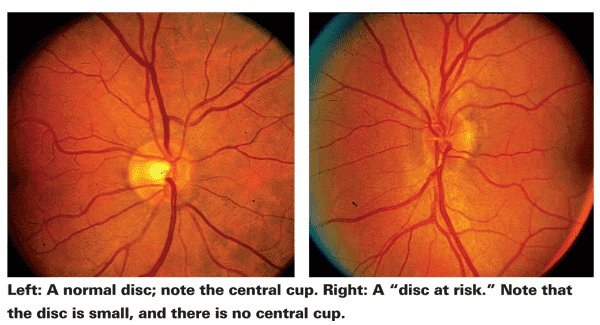
Often a small or absent cup in the other eye’s optic disc.

Signs it may be something else
Pain with eye movement suggests optic neuritis.
Headache, scalp tenderness, jaw pain when chewing, fever or muscle aches suggest giant cell arteritis. This is an emergency, particularly in people over 50.
What to do: Sudden vision loss or a new dark patch in one eye needs same-day assessment, even without pain.
The research
Canada: Health Canada updated the Ozempic and Mounjaro product monographs on June 23, 2026 to include enhanced NAION safety information. The Canadian tirzepatide monograph advises that patients reporting a sudden loss of vision, including partial loss, should be urgently referred for an eye examination, and that treatment should be discontinued if NAION is confirmed.
Recent research: A 2026 study in the Annals of Internal Medicine found that the 18-month risk of ischemic optic neuropathy was about 8.5 cases per 10,000 GLP-1 users, compared with 5.5 per 10,000 among people taking SGLT2 inhibitors. That works out to a few extra cases per 10,000 people treated.
What’s pending: The FOCUS trial of semaglutide versus placebo, with diabetic retinopathy progression as the primary outcome, is expected to finish in 2027. No trial is comparing GLP-1 drugs with other drug classes at matched A1c reductions, which would separate a direct drug effect from early worsening.
Researchers are still working out how much of the risk comes from the drugs themselves. NAION is also more common in people with diabetes, high blood pressure, high cholesterol, sleep apnea, and a crowded “disc at risk” optic nerve shape, which an eye exam can sometimes identify.
Diabetic retinopathy: a more complicated picture
For people with diabetes, the bigger question is how these medications interact with diabetic eye disease.
In the SUSTAIN-6 trial, semaglutide was associated with retinopathy complications, including vitreous hemorrhage and reduced vision, in some patients. Real-world studies disagree. Some large database studies found higher progression risk with GLP-1 drugs, while others found no association.
One explanation is “early worsening.” Intensifying blood sugar control has itself been associated with an initial worsening of diabetic retinopathy. One analysis found that worsening retinopathy occurred in proportion to the drop in A1c.
A trial designed to settle this is underway. The FOCUS trial, with about 1,500 participants with type 2 diabetes, is expected to finish in 2027 (see article at reviewofoptometry)
What this means for you: if you have diabetes, a dilated eye exam before and during treatment matters, especially if you already have retinopathy or your blood sugar is expected to drop quickly.
Other changes you might notice
Some people notice temporary blurry vision or a shift in their glasses prescription when their blood sugar changes quickly. Rapid weight loss and reduced fluid intake can also make eyes feel drier or more irritated. These are usually manageable, but they are worth mentioning at your next visit.
When to act
Sudden vision loss, a new dark or blurry area in your vision, or rapidly worsening eyesight needs urgent assessment, even if it’s painless. Don’t wait for your next routine appointment. Call us or go to urgent care or emergency right away.
Our recommendations
Don’t stop your medication on your own. The risks are small, and stopping can harm your diabetes or weight management. Talk to your prescriber about any concerns.
Tell us you’re on a GLP-1. It helps us interpret your results and decide how often to see you.
Book a comprehensive eye exam before or soon after starting, then keep up regular visits. If you have diabetes, we’ll tailor how often.
Share your risk factors with your prescriber, including any previous optic nerve problems, sleep apnea, or existing retinopathy.
Research in this area is moving quickly, and we’ll update this post as new evidence emerges.
Concerned about your eyes or starting a GLP-1 medication? Book an appointment with Cordova Bay Optometry at
This post is for general information and is not a substitute for personal medical advice.


Comments